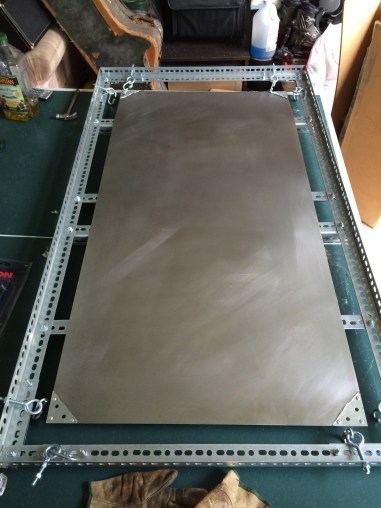
Plate Reverb Build: The Result!

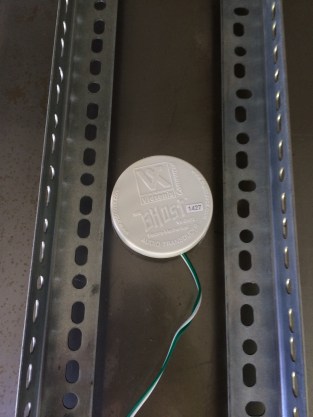
Earlier this week I completely finished my plate reverb. The final things that I needed to do after hanging my plate was hooking up all the electronics and testing to make sure they worked. I started off by drilling some holes in the middle of the plate to bolt my transducer directly to the plate. Here are a couple pictures of that process. I ended up using rubber washers for the backside so I could isolate the metal on metal contact as much as possible.
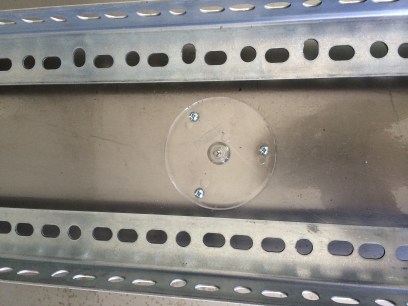
plate1 plate2
plate3

After hooking that up, I had to wire my transducers to some speaker wire. I ended up soldering them together to get a firm connection.

plate4 plate5

After hooking these up, I connected my speaker wire to the 1/4″ mono input jacks, so I could get a signal from the piezo mics. I made sure that I was connecting the right wire to the positive terminal of the 1/4″ jack.

fvdnjfs

After completing all of these tasks, I was done with wiring all my electronics and tested everything to make sure that it worked. To power my transducer, I tried using the headphone amp from my Apogee Quartet to see if it would work. I did get a signal, though it wasn’t as powerful as I wanted it. I made the mistake of not double checking the power requirements of my transducer, and when I hooked up a bigger amp that I thought would work, it ended up blowing the whole thing.

That means that I did not get all the tests and samples that I wanted to get and had to order another transducer that will hopefully get here next week. I did however get one test done and below it shows a dry vocal, one with my plate reverb on it and one with the reverb that I had on in my mix.

That concludes everything that I wanted to get done with this project! I am pretty happy with how everything turned out and I know what I need to do to make a better version in the future. I will have a full analysis of this plate reverb in a couple of weeks when I get my transducer and I find a better amp to power it.
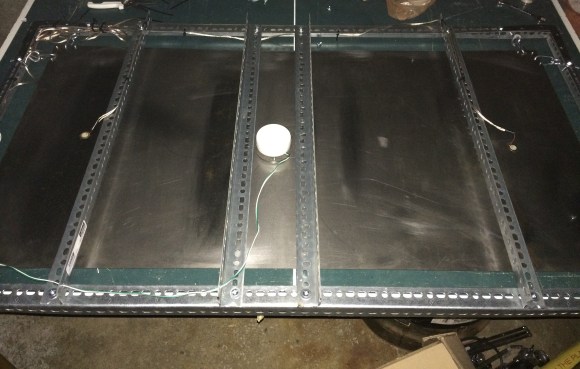
fdff

Plate Reverb Build: Hang Plate from Frame

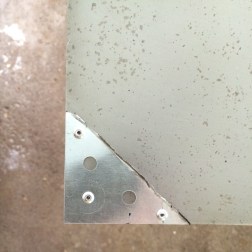
Now that I have my frame complete, it is time to hang the plate by the frame. The way that I did this is by strengthening the corners with a sheet of aluminum. I cut out the corners off the sheet (pretty badly) with a grinder and started to use my sheet metal puncher to make two 9/32″ holes and three 1/8″ holes for the rivets. I also put three 1/8″ holes in my plate to adhere the triangles to the plate.

plate1         plate2

After making all the rivet holes, I started riveting the corners to the plate, and when I was complete with this, I punched through the plate to create the 9/32″ holes to hang by the links.

plate3plate4

Here is a completed look at my plate after the rivets were put in.

plate5

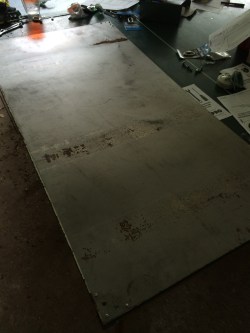
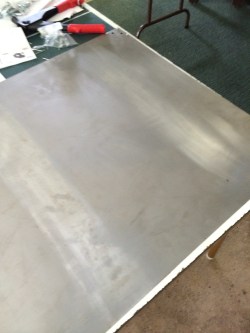
After the rivets were put in, I turned it over to see how the other side of the plate looked. On the side you saw before, I had to sand off the rust because I am using cold-rolled steel, which rusts when oxygen comes in contact with it. This side needed to be sanded down too because there was rust. Here are some before and after pictures of my sanding the plate.

plate6       plate7

plate8       plate9

plate10       plate11

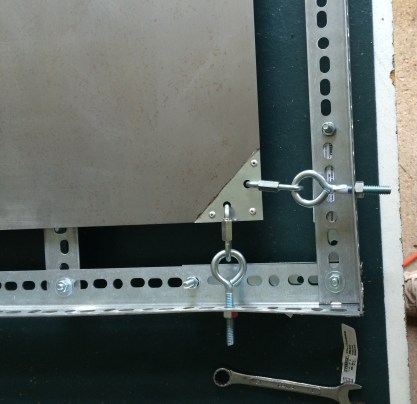
After I sanded down my plate, I brought it over to the frame and set it on it to see how it would look and where I needed my links and eye bolts to be.

plate11

After putting the eye bolts and links where I wanted them, I started connecting the links to the frame and tightening them to tension the frame a little bit, here is a close up of that as well as a video describing what I just did.

plate12

After hanging the plate and tensioning it so it is off the frame, I went and did an initial tuning of my plate. The way you do this is exactly the same as a drum and I demonstrate that in this video.

Since tuning the plate tight made my entire frame less rigid and cockeyed, I will probably just leave it flat so it can keep the structure how I wanted it. I also added some oil to my plate so that the rust does not return as fast. Here is a video demonstrating that.

Up next, I will mount my transducer and piezo mics to the frame as well as wire everything up and test the reverb to make sure it works.

Plate Reverb Build: Steel Choices

For plate reverbs, there are pretty much two different kinds of steel that you can use for your plate. The first would be cold-rolled, which is what EMT used in the past to make their 140’s. Those are known as one of the best physical plate reverb’s to this day. It is hard to find information on why they used cold-rolled steel for their reverbs. Bob Buontempo has heard from others that cold-rolled has a more natural sound to it as well as a less metallic decay.

Jim Cunningham of JCC and Associates used the other option, stainless steel. In this article, he says that during his research, he found that stainless steel had a better high frequency response than cold-rolled. This is more suited for rock music. He also said the cold-rolled is more like a concert hall, which suits classical music. Bob has also heard people using stainless because it is more consistent, as well as it being tarnish proof.

It is a very subjective subject on what you should use since both options have worked in the past. Because of this, I will have to make a reverb with both cold-rolled and stainless to hear the differences for myself and come to a conclusion.