
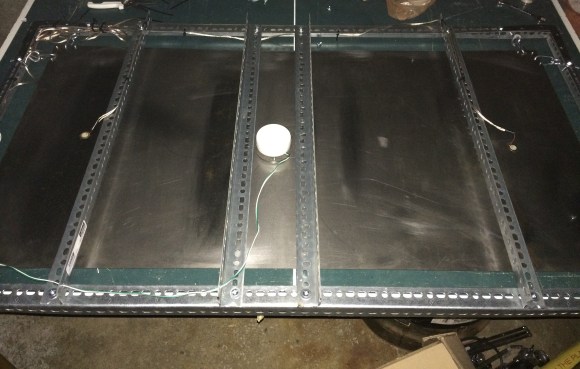
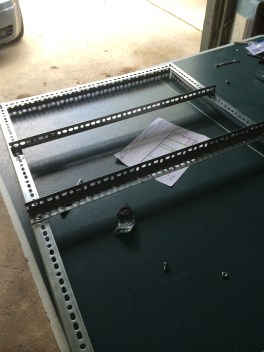
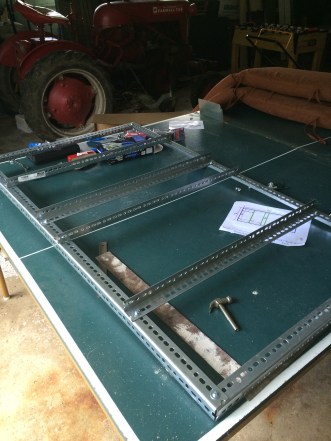
Earlier this week I completely finished my plate reverb. The final things that I needed to do after hanging my plate was hooking up all the electronics and testing to make sure they worked. I started off by drilling some holes in the middle of the plate to bolt my transducer directly to the plate. Here are a couple pictures of that process. I ended up using rubber washers for the backside so I could isolate the metal on metal contact as much as possible.
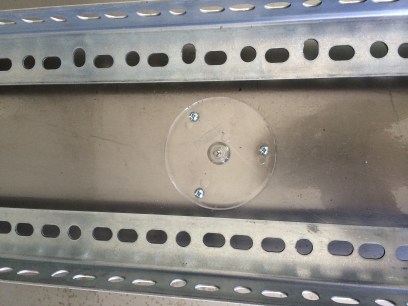

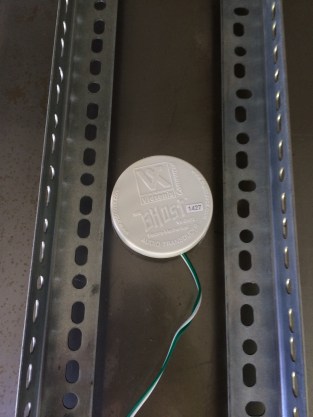
After hooking that up, I had to wire my transducers to some speaker wire. I ended up soldering them together to get a firm connection.


After hooking these up, I connected my speaker wire to the 1/4″ mono input jacks, so I could get a signal from the piezo mics. I made sure that I was connecting the right wire to the positive terminal of the 1/4″ jack.

After completing all of these tasks, I was done with wiring all my electronics and tested everything to make sure that it worked. To power my transducer, I tried using the headphone amp from my Apogee Quartet to see if it would work. I did get a signal, though it wasn’t as powerful as I wanted it. I made the mistake of not double checking the power requirements of my transducer, and when I hooked up a bigger amp that I thought would work, it ended up blowing the whole thing.
That means that I did not get all the tests and samples that I wanted to get and had to order another transducer that will hopefully get here next week. I did however get one test done and below it shows a dry vocal, one with my plate reverb on it and one with the reverb that I had on in my mix.
That concludes everything that I wanted to get done with this project! I am pretty happy with how everything turned out and I know what I need to do to make a better version in the future. I will have a full analysis of this plate reverb in a couple of weeks when I get my transducer and I find a better amp to power it.





 franksullivansound.com