
Plate Reverb Build: Researching Electronics, Part 2

On my last post: Researching the Electronics, Part 1. I talked about the piezo mics and what I would need to do to get them to have a balanced output. For this research, I will be talking about the transducer that I am using, as well as my input/output scenario.

ghost

For my transducer, I have decided on the Vidsonix Ghost Transducer. In my researching and looking at other DIY projects, including this Tape Op thread on them, I have found this to be what other people have started to use and are great for the money. I also have a couple of old speakers that I can dismantle and try out those voice coils to see how they sound, which will probably happen in future iterations of my plate reverbs.

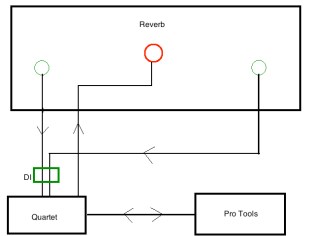
My input/output will be all 1/4″ TS in and out. My recorded tracks will output from my Apogee Quartet into the 1/4″ TS input to the Vidsonix Ghost. Then, it will be picked up through my Piezo discs back through a 1/4 TS connector. I will have DI boxes to convert into a balanced mic level input, which will go back to the inputs of my Apogee Quartet’s pre-amps and into Pro Tools. I have decided on the 1/4″ TS because my piezo mics are unbalanced, so TRS connectors would be unnecessary.

Here is a diagram of that setup:
IO


Overall, I think this combination will be a good starting point for these reverbs and I can always upgrade my components at a later date.

Plate Reverb Build: Schedule

Now I am at a point in this project where all I have left to do is to build the reverb itself. I have done almost all the research, which I will be finishing up this week. I am treating week 9 as a flex week. If there are any difficulties that come up before that, there is a week where I can make it up.  I am still not sure if I will be making a damping plate and wooden frame for this reverb or if I will wait until later in the summer to do so.

Here is my whole build schedule for the rest of this project.

This week (6):

  • Build Steel Frame
  • Research Electronics, Part 2
  • Research Steel Acoustics

Week 7 (5/17-5/23):

  • Hang Plate By Frame
  • Build and wire all Electronics

Week 8 (5/24-5/30):

  • Mount Piezo Mics
  • Mount Transducer
  • Test Reverb to see if it works

Week 9 (5/31-6/6):

  • Analyze results of test
  • Damping Plate ???
  • Wooden Frame ???

Week 10 (6/7-6/13):

  • Tweak final product
  • Make samples to put on website
  • Take professional pictures

Plate Reverb Build: Needed Materials

Building this plate reverb will not be without some costs. I have come up with everything that will be needed to complete this project.

1x Cold Rolled Steel Plate – ($26)
2x 1-1/2 in. x 60 in. Zinc-Plated Slotted Angle ($28)
2x 1-1/2 in. x 14-Gauge x 36 in. Zinc-Plated Slotted Angle ($52)
1x 12-pack 20mm Piezoelectric Elements/Contact Pickups with 2″ Leads ($17)
1x Vidsonix Ghost Transducer ($20)
1x GLS Audio 1/4″ Jacks Female TS Mono Panel Mount Jack – 4 PACK ($12)
8x 880 lb. x 1/4 in. Zinc-Plated Quick Link ($18)
8x 1/4 in. x 2 in. Zinc-Plated Steel Eye Bolts with Nut ($5)
1x TEKTON 6555 Rivet Gun with 40-pc. Rivets ($14)
1x Neiko Hand Held Power Punch, Sheet Metal Hole Punch Kit($31)
16x Stanley-National Hardware 1-in Metallic Corner Brace ($25)

Overall, the entire cost of this project will be $248 if I don’t include the wooden frame and damping plate, which are both optional at this point. This doesn’t include the extra nuts, bolts and screws that I will need to keep everything together. It also leaves me with some extra supplies for my second attempt at it, and I won’t have to buy the tools again.

Next up is buying all of these materials, as well as researching the acoustics of metals and damping plates, which will come later this weekend.